
Clean windows change how a whole property looks and feels. They let in more daylight, make brickwork and frames look better, and tell visitors that a home is cared for. This guide explains how professional window cleaning works, what to expect from it, how often it is worth doing, and how to keep your glass cleaner between visits.
Why clean windows matter more than you might think
Most of us only notice dirty windows when the sun hits them at the wrong angle. By then the glass has usually been building up a film for months. Traffic fumes, pollen, rain that dries as it runs down the pane, spiders and their webs, and the green algae that gathers in frame corners all settle on glass and stay there.
That film does more than look untidy. It cuts down the daylight reaching your rooms, makes glass look hazy from inside as well as out, and gives dirt something to cling to, so windows get dirty faster the longer they are left. Algae and grime on frames and sills also spread. In damp, shaded spots they can start to mark the seals and the plastic itself.
There is a practical side too. Clean windows make it much easier to spot a failed seal, a misted double-glazed unit, a cracked pane or a frame that needs attention, because you are looking at the glass rather than at the dirt on it.
Signs your windows are overdue a clean
You do not need to wait for windows to look filthy. Regular cleaning keeps dirt from bonding to the glass, which makes every later clean easier and gives a better result. These are the usual signs it is time:
- Streaks, smears or a faint haze that is most obvious in low sunshine
- Small white or grey spots on the glass, which is dried mineral residue from tap water
- Green or black marks in the frame corners, along the seals and on the sills
- A grey film on white frames and doors that scrubbing with a cloth no longer shifts
- Bird droppings, blossom, sap or cobwebs gathered on upper windows you cannot reach
- Dust left behind after building work, or a dull look after a long wet winter
How we clean windows, step by step
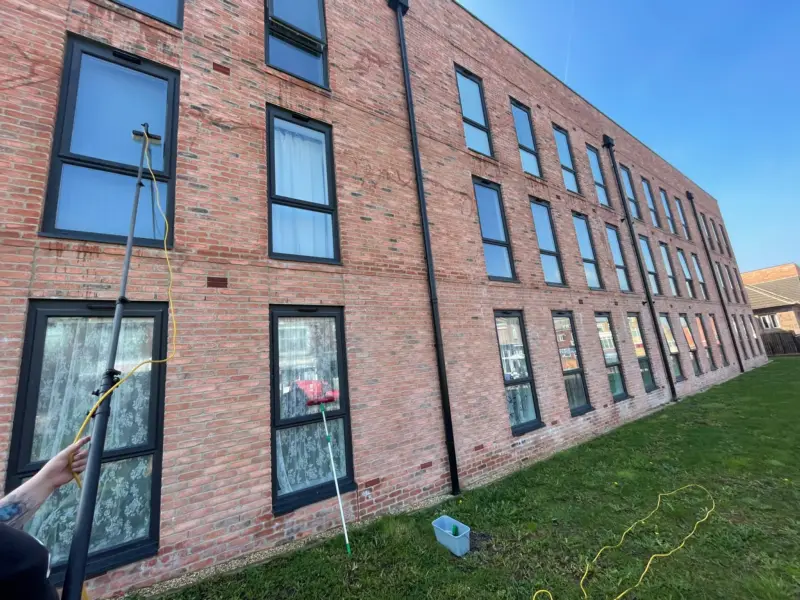
Most of our window cleaning is done with a water-fed pole: a lightweight, extendable pole with a soft brush at the top, connected to a supply of purified water. The process is simple, but the details are what give a streak-free finish:
- We check the windows, frames and sills first and agree with you what is included and how we will get access
- The brush loosens dirt from the glass, the frame and the sill together, so nothing is left to run back down the pane
- Purified water is flushed over the whole window to rinse the dirt away
- The window is left to dry naturally, with no wiping, so there is nothing to leave smears or lint behind
- Where a window suits hand work better, such as small leaded lights or an awkward porch, we use a traditional squeegee and ladder instead
Why pure water leaves glass spotless
Ordinary tap water contains dissolved minerals. When a drop of it dries on glass the water evaporates but the minerals stay behind as a tiny white spot. That is why a window rinsed with a hose or cleaned with a bucket often dries with marks.
Pure water has had those minerals filtered out before it reaches the pole. Because there is nothing left in it to leave behind, it dries clear. It also tends to attract dirt from the surface rather than leaving a layer of its own, which is why it needs no detergent. That matters because soap and washing-up liquid leave a thin residue that attracts dust and makes windows dirty again sooner.
What affects how your windows turn out
Every property is different, and a few things make a noticeable difference to the result and to how we approach a job:
- How long since the last clean. Windows cleaned regularly are quick to refresh, while glass that has been left for years may need a more thorough first visit
- Where the property is. Homes near busy roads, building sites or large trees get dirtier faster
- The condition of the frames. Clean frames help windows look their best, but older or discoloured plastic may not whiten fully, and we will tell you honestly what to expect
- Access. Side gates, conservatories, extensions and tight alleys affect how we reach each window
- The type of glass. Leaded lights, bay windows and large picture windows each suit slightly different methods
How often should windows be cleaned?
There is no single right answer, because it depends on where you live and how you like your home to look. As a rough guide, many households choose a regular visit every four to eight weeks, which keeps glass looking its best all year. Others prefer a clean every three months, or a couple of times a year to get on top of the worst of the dirt.
Homes on busy roads, under trees or close to open land and farmland tend to need cleaning more often. Ground-floor windows in built-up areas collect road film quickly, while upstairs windows stay cleaner for longer.
We will happily suggest a sensible routine when we quote. A regular schedule is usually the easiest way to keep windows looking good, and each visit takes less effort than a one-off clean after a long gap.
Can you do it yourself? Ladders, squeegees and streaks
Plenty of people clean their own windows, and for ground-floor glass there is nothing wrong with that. The usual challenges are streaks, and anything above the first floor.
Bucket-and-cloth cleaning with household detergent can leave a film and lint on the glass, and tap-water rinsing leaves mineral spots as it dries. Frames and sills are often missed, so a clean pane ends up surrounded by dirt.
The bigger concern is height. Working from a ladder to reach upstairs windows is one of the more common causes of household falls, and leaning a ladder against plastic frames or glass can damage them. A pole cleans the same windows from the ground, which is safer for you, your property and your plants.
Keeping your windows cleaner for longer
A few small habits make each clean last longer. Wipe the inside of frames and trickle vents now and then, because dirt inside can find its way out. Trim overhanging branches that drop sap and blossom on the glass. Keep your gutters clear too, since an overflowing gutter runs dirty water straight down the window.
Many customers book their windows alongside other jobs so the whole outside of the house is done together. Gutter cleaning and soffit and fascia cleaning work especially well with windows, because the roofline is what drips grime onto the glass below. If you have a conservatory, our conservatory cleaning covers the glass, roof and frames in one visit.
If you own or manage commercial premises, our commercial window cleaning service offers scheduled visits for shops, offices and public buildings.
Window cleaning across Sheffield, Barnsley and Rotherham
South Yorkshire homes face a mix of conditions. Hillside streets catch the wind and rain. Older stone and brick houses sit close to the road. Terraces share rooflines, and newer estates are surrounded by open ground and building work. All of these leave their own mark on glass.
We clean windows across Sheffield (High Green, Chapeltown, Burncross, Ecclesfield, Grenoside, Wincobank, Stannington, Oughtibridge and Hillsborough), Rotherham (Thorpe Hesley, Kimberworth, Greasbrough, Brinsworth, Wickersley, Scholes and North and South Anston) and Barnsley (Tankersley, Hoyland, Birdwell, Elsecar and Wombwell). Choose your town below to see how we handle window cleaning where you live, or send us your address and we will confirm we cover it.
Still reading? There is more.
6 more sections cover: