
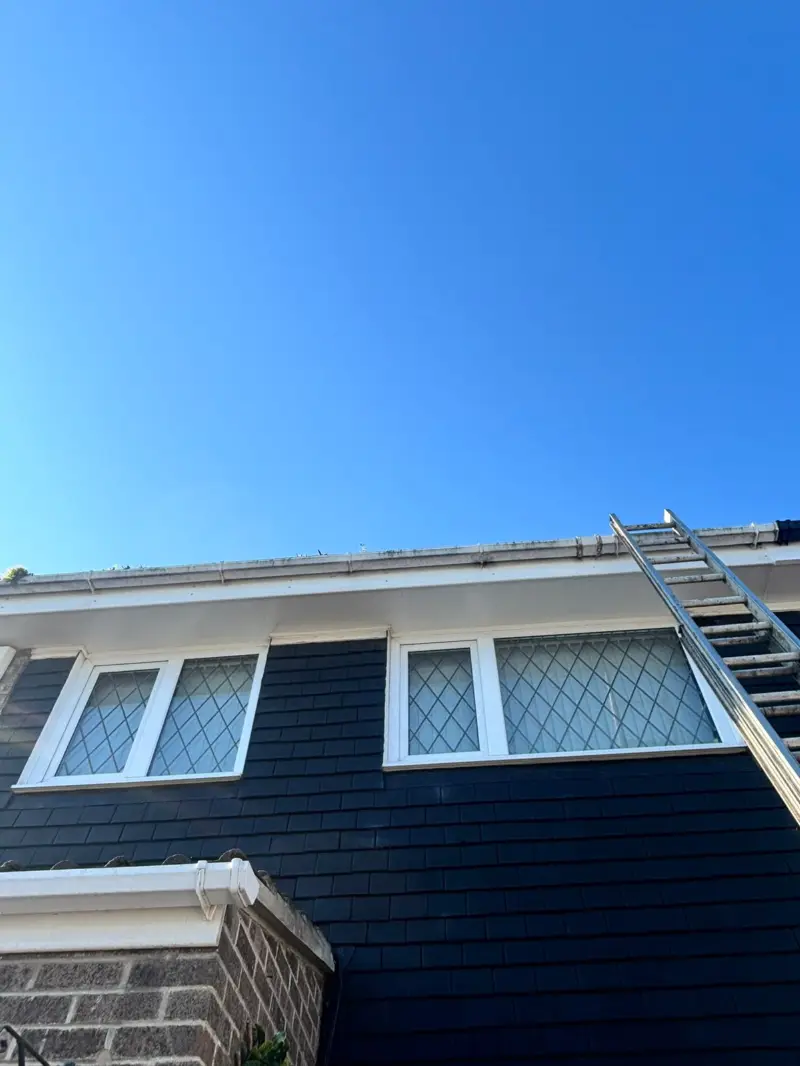
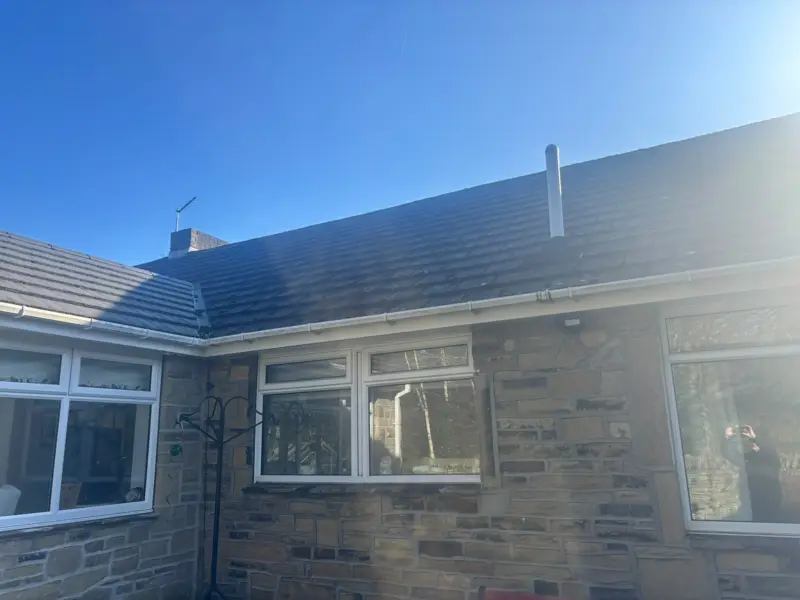
Windows get the attention, but it is the roofline that frames a house, and a dingy one drags down even a well-kept home. Around Rotherham, where so much of the housing is built in rows and estates, one tired roofline repeats up and down a whole street in Kimberworth Park or Brinsworth. The cause is simple: plastic and painted timber sit outside all year, in the damp, the wind and the dust, and nobody washes them. This guide sets out what happens to roofline boards in the eight places we cover, how the local housing shapes the work, and what a clean can and cannot do.
Why Rotherham rooflines go dull
The top edge of a fascia catches rain, which runs down and dries in streaks, and the gutter front beneath it stays damp for long stretches. Algae loves that combination, and a thin green line along the top of the board is usually the first sign. Beneath the overhang, the soffit stays dry and sheltered, so dust, cobwebs and insect nests build up instead.
The local landscape adds its own ingredients. Pale dust from the quarries around South Anston settles on boards and sticks when it gets damp. Traffic film from the M1, the M18 and Bawtry Road marks boards facing the road. Woodland edges at Greasbrough, Scholes and Thorpe Hesley drip sap that leaves dark spots on white plastic.
Rooflines by house type
The houses here fall into recognisable families. Older terraces at the centres of Thorpe Hesley, Kimberworth and Greasbrough have long, straight rooflines shared by several houses. Inter-war and early post-war estates, in Brinsworth and on Kimberworth Park, have semis with hipped or gabled roofs and boards on three or four sides. Bungalows, so common in Wickersley and Brinsworth, have low, easy-to-reach boards, and extensions and porches add short runs at awkward heights. Stone cottages in Scholes and South Anston may have timber boards, or just a stone eaves course.
Each family sets a different job. A terrace means agreeing which stretch of board is yours. A hipped roof means more length to cover. Bungalows are quick, and a stone eaves needs only the gutter fronts. Timber that has been painted needs a gentler hand. The exact boards are fixed with you ahead of the visit, so the day holds no surprises.
Rooflines in Thorpe Hesley and Scholes
Thorpe Hesley's estates have plastic fascias and soffits that brighten up well, and its older terraces near the church have long shared runs. The side of the village nearest the motorway wears a grey road film on any board facing the traffic, while houses near Hesley Wood, where trees now cover the old colliery land, get sap speckling and webs under every overhang by late summer.
Scholes is mostly stone cottages and a few newer homes, hemmed in by the trees of Scholes Coppice and the Wentworth parkland. Old cottages may have painted timber boards, repainted many times, or a plain stone eaves with nothing to clean but the gutter front. Painted timber gets a lighter hand: we check the paint first and leave anything flaking well alone.
Rooflines in Kimberworth and Greasbrough
Kimberworth Park's semis were built in volume, and their hipped roofs carry boards on every side, much of it now replaced with white plastic. On a row of matching houses, boards weather in the same way, so the green line on one north-facing fascia is usually repeated all down the street. The ridge is open to the valley wind, and the exposed side of each house greys faster than the sheltered one.
Greasbrough's houses stand among trees. Overhanging branches drip onto fascias and keep them damp, and black speckling on a white board under a tree is usually sap and the mould that grows on it. The land slopes in both places, so the underside of a soffit is often visible from the street below, and a pole is far safer than a ladder on a steep drive.
Rooflines in Brinsworth and Wickersley
Brinsworth's estates are plain, regular and easy to read: where one house shows green, its neighbours do too. Most original timber boards have been replaced with plastic over the years, and a clean brings them back from grey to white. Porches and rear extensions add short fascias of their own, and houses on the busier roads collect a road film on the front boards.
Wickersley has a great many bungalows and large detached homes, with deep, wide soffits that are easy to reach and very visible from the drive. Tall hedges and mature gardens keep some boards shaded and damp, and houses facing Bawtry Road wear the grime of the traffic. Big extensions mean extra lengths of fascia at different heights, which we include in the agreed list.
Rooflines in North Anston and South Anston
North Anston's estates have plain plastic boards that have yellowed or greened in places, and the wind-blown dust of the area clings to them. Boards on these semis and bungalows are low and open to the street, so the work is quick, and the difference is easy to see from the pavement.
Across Anston Brook and the A57, South Anston's older limestone houses may have timber boards, or just a stone eaves course. Its quarries are a steady source of pale dust, which sticks to damp boards and does not rinse off in the rain, and gardens backing onto Anston Stones Wood add drip and seed. A visit every year or two keeps the whole roofline looking cared for.
Why a clean roofline matters beyond looks
Boards at the roof edge protect the timbers behind them, so keeping them in good order is more than cosmetics. Green growth holds moisture against plastic and paint, and a build-up of dirt and webs under the overhang hides small problems such as gaps at the joints or a board that has started to bow.
A clean roofline also changes how a house reads from the street. Homes in a row or on an estate tend to be judged side by side, and one bright roofline among a dull row stands out. For sellers and landlords, that kerb appeal is often the cheapest improvement available.
How we clean a roofline
The pole carries purified water up to the roof edge and a soft brush at its tip. We work along each board, loosening algae, webs and grime, and rinse behind the brush so that the loosened dirt is carried away and the board dries clean. No harsh chemicals are involved, and no scaffolding is needed. Nothing rests on your gutters, which matters on plastic runs that can crack.
The scope comes first. You tell us which parts of the roofline you want brought up, whether that is every board or just the front, and we plan accordingly. While we are along the edge, we brush the outer face of the guttering, its brackets and end caps too, so the finish is consistent. We spot cracked boards, sagging gutters and open joints as we go, and we report them at the end.
The Rotherham roofline calendar
March to May shows what winter left behind: a green edge on the fascia and grime on the soffit. Summer is cobweb season, with long evenings for comfortable working. October and November, once the leaves have gone, are ideal for pairing with a gutter clear, because the board and its channel get done in a single trip. Ice and frost make a roofline unsafe, so we wait for better weather.
Expect to book a roofline every year or two. A house under trees in Greasbrough or Scholes, or on the dark side of the Kimberworth ridge, may deserve it more often, and we suggest a pattern when we see the property.
Roofline problems we meet in Rotherham
These are the jobs that crop up most often from Thorpe Hesley to South Anston:
- A green or black line of algae riding the top of the fascia and the gutter front
- Pale quarry and field dust that has stuck to damp boards
- Webs and insect nests tucked under soffits near gardens and woodland
- Sap spotting and mould beneath overhanging branches
- Grime streaks on fascias that face busy roads
- Tide marks where an overflowing gutter has run down the board
Pairing the roofline with other work
Boards look best when the gutter in front of them is clear, so many customers pair this job with gutter cleaning in Rotherham. Roof cleaning deals with the moss above, window cleaning keeps the glass in step, and conservatory cleaning covers the extension.
Rooflines are cleaned in Sheffield and Barnsley too, and you can browse exterior cleaning in Rotherham for the full range.
Still reading? There is more.
8 more sections cover: